<img height="1" width="1" style="display:none;" alt="" src="https://px.ads.linkedin.com/collect/?pid=6554964&amp;fmt=gif">

The Silver Tsunami Is Here. Is Your LTPAC Practice Ready?
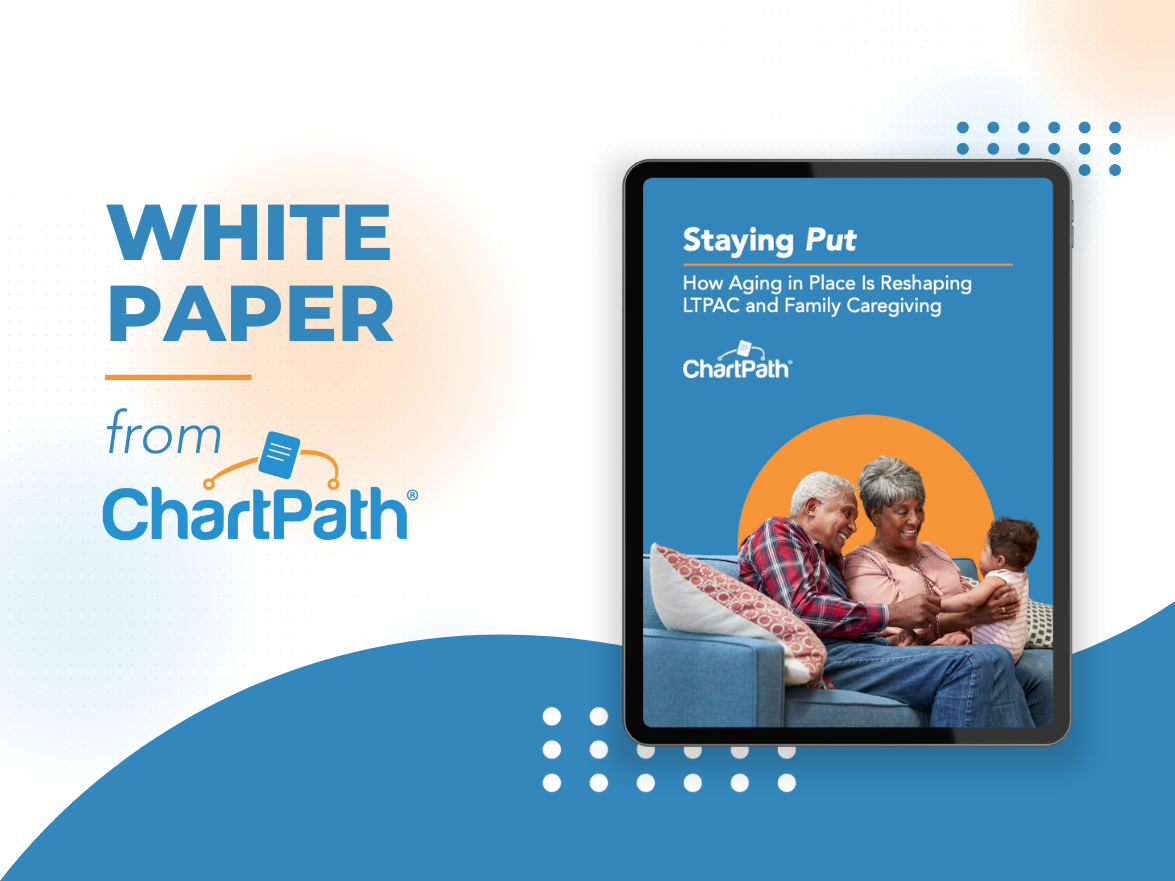
Millions of older adults are choosing to age at home. This free guide breaks down what that means for LTPAC clinicians, family caregivers, and the future of care delivery.

Over 1 in 6 Americans are now 65 or older, and the oldest baby boomers are already in their late 70s. The vast majority want to stay in their homes and communities, not in institutional care settings. But the infrastructure to support them is struggling to keep up. Three-quarters of older adults with functional or cognitive impairments already rely on unpaid family caregivers, and most LTPAC systems were never designed for this reality. This guide explores what is driving the shift and what clinicians can do to stay ahead of it.

What You'll Learn

Inside this free guide, you'll discover:

  • Why aging in place has moved from a niche preference to the defining care trend of the next decade
  • What the "silver tsunami" means for LTPAC staffing, documentation, and care delivery models
  • How over 53 million unpaid family caregivers are becoming the hidden backbone of elder care, and what clinicians can do to support them
  • Why most traditional EHR systems are not built for home-based, multi-setting care, and what to look for instead
  • How hybrid and hospital-at-home models are reshaping the care continuum right now
  • What policy shifts, including expanded HCBS waivers and caregiver training codes, mean for your practice

Informed by data from the U.S. Census Bureau, Johns Hopkins Bloomberg School of Public Health, CMS, the American Psychological Association, and the National Alliance for Caregiving.

Who This Is For

This guide is written specifically for:

  • LTPAC clinicians and administrators planning for home-based care expansion
  • Skilled Nursing Facility leaders evaluating hybrid care models
  • Care coordinators working with family caregivers and high-need older adults

Form CTA